点击右上角 ··· 选择
【发送给好友】或【分享到朋友圈】
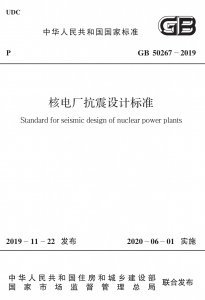
GB 50267-2019 核电厂抗震设计标准 - 工标库

GB 50267-2019 核电厂抗震设计标准 现行

发布日期:2019-11-22

实施日期:2020-06-01

替代以下标准: GB 50267-97  

  • 标准信息
  • 中文目录
  • 英文目录
  • 公告

中文目录

  • 中华人民共和国住房和城乡建设部公告

  • 前  言

  • 1 总  则

  • 2 术语和符号

    • 2.1 术  语

    • 2.2 符  号

  • 3 基本要求

    • 3.1 抗震概念设计原则

    • 3.2 计算模型

    • 3.3 地震作用计算方法

    • 3.4 楼层反应谱

    • 3.5 结构和材料的力学参数

    • 3.6 作用效应组合和抗震验算

    • 3.7 抗震措施

  • 4 设计地震动

    • 4.1 一般规定

    • 4.2 设计基准地震动参数

    • 4.3 设计地震动加速度时程

    • 4.4 非基准点处的设计地震动

  • 5 地基、基础和边坡

    • 5.1 一般规定

    • 5.2 地基和基础的抗震验算

    • 5.3 边坡的抗震稳定性验算

    • 5.4 地基液化判别

  • 6 安全壳、建筑物和构筑物

    • 6.1 一般规定

    • 6.2 作用效应及其组合

    • 6.3 抗震验算

  • 7 地下结构和地下管道

    • 7.1 一般规定

    • 7.2 地下结构的地震作用

    • 7.3 地下管道的地震作用

    • 7.4 抗震验算

    • 7.5 抗震措施

  • 8 设备和部件

    • 8.1 一般规定

    • 8.2 地震作用和地震作用效应

    • 8.3 作用效应组合和设计限值

  • 9 工艺管道

    • 9.1 一般规定

    • 9.2 地震作用和地震作用效应

    • 9.3 作用效应组合和设计限值

    • 9.4 抗震措施

    • 9.5 阻尼器

  • 10 地震监测与报警

    • 10.1 一般规定

    • 10.2 系统设备的布设

    • 10.3 设备功能与指标

    • 10.4 设备维护与检修

  • 附录A 地基与结构的相互作用分析

    • A.1 地基的集中参数分析模型

    • A.2 地基的有限元分析模型

    • A.3 相互作用体系的子结构分析方法

  • 附录B 地震作用最大值的组合

    • B.1 振型叠加反应谱分析中的组合方法

    • B.2 时程分析中的组合方法

  • 附录C 多点输入地震反应分析

  • 附录D 设计楼层反应谱的调整

  • 附录E 基于性能的抗震安全概率评估参考方法

  • 附录F 标准设计反应谱

  • 附录G 目标功率谱密度的参考计算方法

  • 附录H 建筑物、构筑物的作用效应组合和分项系数

  • 附录J 地下结构抗震计算的拟静力方法

    • J.1 反应位移法

    • J.2 反应加速度法

  • 附录K 设备抗震鉴定试验

    • K.1 一般要求

    • K.2 激振装置及外围设备

    • K.3 试件和测点布置

    • K.4 试验程序和步骤

    • K.5 动态特性探查试验

    • K.6 抗震性能试验

    • K.7 最终检验及合格性评定

    • K.8 鉴定试验报告

  • 附录L 设备、部件的容许应力和设计限值

    • L.1 容许应力

    • L.2 设计限值

  • 附录M 工艺管道应力限值和应力指数

    • M.1 管道设计限值

    • M.2 管道部件的应力指数

  • 本标准用词说明

  • 引用标准名录

英文目录

  • 1 General provisions

  • 2 Terms and symbols

    • 2.1 Terms

    • 2.2 Symbols

  • 3 Basic requirements

    • 3.1 Principle of seismic conceptual design

    • 3.2 Computation model

    • 3.3 Computation methods of earthquake action

    • 3.4 Floor response spectrum

    • 3.5 Mechanical parameter of structures and materials

    • 3.6 Combination for action effects and seismic checking

    • 3.7 Aseismic measures

  • 4 Design ground motions

    • 4.1 General requirements

    • 4.2 Parameters of basic design ground motions

    • 4.3 Time histories of design ground motions

    • 4.4 Ground motions in non-datum points

  • 5 Foundation,baseandslope

    • 5.1 General requirements

    • 5.2 Seismic checking for foundation and base

    • 5.3 Seismic stability checking for slope

    • 5.4 Determination of soil liquefaction

  • 6 Containments,buildings and structures

    • 6.1 General requirements

    • 6.2 Effects of actions and their combinations

    • 6.3 Seismic checking

  • 7 Subterranean structures and subterranean pipes

    • 7.1 General requirements

    • 7.2 Earthquake actions of subterranean structures

    • 7.3 Earthquake actions of subterranean pipes

    • 7.4 Seismic checking

    • 7.5 Aseismic measures

  • 8 Equipments and components

    • 8.1 General requirements

    • 8.2 Earthquake actions and effects of the actions

    • 8.3 Combination for action effects and limiting design value

  • 9 Process pipes

    • 9.1 General requirements

    • 9.2 Earthquake actions and effects of the actions

    • 9.3 Combination for action effects and limiting design value

    • 9.4 Aseismic measures

    • 9.5 Dampers

  • 10 Earthquake monitoring and alarm

    • 10.1 General requirements

    • 10.2 Device configuration of the system

    • 10.3 Device function and technical index

    • 10.4 Maintenance and overhaul of devices

  • Appendix A Analysis of foundation-structure interaction

  • Appendix B Combination for maximum earthquake actions

  • Appendix C Seismic response analysis of structure subjected to multiple inputs

  • Appendix D Adjustment of design floor response spectrum

  • Appendix E Reference method for performance-based seismic safety probability estimates

  • Appendix F Standar ddesign response spectra

  • Appendix G Reference calculation method for target power spectral density

  • Appendix H Combination for action effects and partial factors for buildings and structures

  • Appendix J Quasi-static calculation methods for subterranean structures

  • Appendix K Seismic evaluation tests for equipments

  • Appendix L Allowable stress and limiting design value for equipments and components

  • Appendix M Stress limit and stress index forprocess pipes

  • Explanation of wording in this standard

  • List of quoted standards

中华人民共和国住房和城乡建设部公告

4-40-00
2019年 第332号
住房和城乡建设部关于发布国家标准《核电厂抗震设计标准》的公告
现批准《核电厂抗震设计标准》为国家标准,编号为GB 50267—2019,自2020年6月1日起实施。其中,第1.0.31.0.53.1.24.1.14.4.35.2.35.3.15.4.110.1.1条为强制性条文,必须严格执行。原《核电厂抗震设计规范》(GB 50267—97)同时废止。
本标准在住房和城乡建设部门户网站(www.mohurd.gov.cn)公开,并由住房和城乡建设部标准定额研究所组织中国计划出版社出版发行。
中华人民共和国住房和城乡建设部
2019年11月22日

本书术语

术语 英文名称
物项 tructure,system and component(SSC)
地震动 ground motion
设计基准地震动 design basis ground motion
极限安全地震动 ltimate safety ground motion
运行安全地震动 operational safety ground motion
厂址特定地震反应谱 site-specific response spectr
标准设计反应谱 normalized response spectra
抗震设防烈度 seismic precautionary intensity
要求反应谱 required response spectra(RRS)
试验反应谱 test response spectra(TRS)

首页 |关于我们 |联系我们 |帮助中心

主办:中国发展改革出版社 版权所有 侵权必究 合作共建单位:中国工程建设标准化协会 京ICP备05021380号-5
新建收藏夹

选择收藏夹

收藏夹名称