点击右上角 ··· 选择
【发送给好友】或【分享到朋友圈】
GB 50909-2014 城市轨道交通结构抗震设计规范 - 工标库

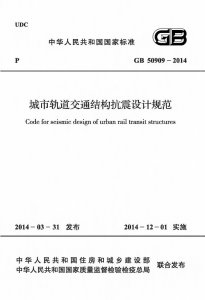
GB 50909-2014 城市轨道交通结构抗震设计规范 现行

发布日期:2014-03-31

实施日期:2014-12-01

  • 标准信息
  • 中文目录
  • 英文目录
  • 公告

中文目录

  • 中华人民共和国住房和城乡建设部公告 第365号

  • 前  言

  • 1 总  则

  • 2 术语和符号

    • 2.1 术  语

    • 2.2 符  号

  • 3 基本要求

    • 3.1 抗震设防要求

    • 3.2 抗震性能要求

    • 3.3 地震反应计算

    • 3.4 减震设计

    • 3.5 地震反应观测

  • 4 场地、地基与基础

    • 4.1 一般规定

    • 4.2 场  地

    • 4.3 地基与基础

    • 4.4 可液化场地

    • 4.5 场地地震反应分析

  • 5 地震作用

    • 5.1 一般规定

    • 5.2 水平向设计地震动参数

    • 5.3 竖向设计地震动参数

    • 5.4 设计地震动加速度时程

  • 6 地震反应计算

    • 6.1 一般规定

    • 6.2 地面结构弹性反应谱方法

    • 6.3 地面结构弹塑性反应谱方法

    • 6.4 地面结构非线性时程分析方法

    • 6.5 支座地震反应计算方法

    • 6.6 隧道与地下车站结构横向地震反应计算的反应位移法

    • 6.7 隧道与地下车站结构横向地震反应计算的反应加速度法

    • 6.8 隧道纵向地震反应计算的反应位移法

    • 6.9 隧道与地下车站结构地震反应计算的时程分析方法

  • 7 抗震性能的验算方法

    • 7.1 一般规定

    • 7.2 钢筋和钢骨混凝土构件

    • 7.3 钢管混凝土构件和钢构件

    • 7.4 基  础

    • 7.5 支  座

    • 7.6 梁端支承长度和行车安全

    • 7.7 隧道与地下车站结构

  • 8 高架区间结构

    • 8.1 一般规定

    • 8.2 地震反应计算

    • 8.3 抗震性能验算

    • 8.4 抗震构造细节

    • 8.5 抗震措施

  • 9 高架车站结构

    • 9.1 一般规定

    • 9.2 地震反应计算

    • 9.3 抗震性能验算

    • 9.4 抗震构造措施

  • 10 隧道与地下车站结构

    • 10.1 一般规定

    • 10.2 隧道结构地震反应计算

    • 10.3 地下车站结构地震反应计算

    • 10.4 抗震性能验算

    • 10.5 抗震构造措施

  • 附录A 支座的恢复力模型

  • 附录B 基于集中参数模型的静力与动力分析方法

    • B.1 桩基础集中参数建模方法

    • B.2 扩大基础集中参数建模方法

    • B.3 静力非线性分析

    • B.4 动力非线性分析

  • 附录C 多点输入反应谱组合系数的计算方法

  • 附录D 动力分析中基础的等代弹簧法

    • D.1 桩基础等代弹簧

    • D.2 扩大基础等代弹簧

  • 附录E 反应位移法中土层位移的简单确定方法

  • 附录F 钢筋和钢骨混凝土构件抗剪能力计算方法

    • F.1 柱式构件的抗剪能力

    • F.2 板构件的抗剪能力

  • 附录G 构件变形能力计算方法

    • G.1 钢筋和钢骨混凝土构件变形能力计算方法

    • G.2 钢管混凝土构件变形能力计算方法

    • G.3 钢构件变形能力计算方法

  • 本规范用词说明

  • 引用标准名录

英文目录

  • 1 General provisions

  • 2 Terms and symbols

    • 2.1 Terms

    • 2.2 Symbols

  • 3 Basic requirements

    • 3.1 Requirements for seismic precaution

    • 3.2 Requirements for performance-based design

    • 3.3 Seismic response evaluation procedure

    • 3.4 Isolation

    • 3.5 Seismic response observation system

  • 4 Site,Soils and foundation

    • 4.1 General requirements

    • 4.2 Site

    • 4.3 Soils and foundations

    • 4.4 Liquefiable sites

    • 4.5 Site seismic response analysis

  • 5 Earthquake action

    • 5.1 General requirements

    • 5.2 Design parameters for horizontal ground motions

    • 5.3 Design parameters for vertical ground motions

    • 5.4 Design ground motion acceleration time history

  • 6 Seismic response analysis

    • 6.1 General requirements

    • 6.2 Elastic response spectrum method for aboveground structures

    • 6.3 Elastoplastic response spectrum method for aboveground structures

    • 6.4 Nonlinear time-history analysis method for aboveground structures

    • 6.5 Seismic analysis method for bearings

    • 6.6 Response displacement method for the transverse seismic response of tunnels and subground stations

    • 6.7 Response acceleration method for the transverse seismic response of tunnels and subground stations

    • 6.8 Response displacement method for the longitudinal seismic response of tunnels

    • 6.9 Time-history analysis method for the seismic response of tunnels and subground stations

  • 7 Seismic performance verification procedure

    • 7.1 General requirements

    • 7.2 Reinforced concrete and steel reinforced concrete members

    • 7.3 Concrete-filled steel pipe members and steel members

    • 7.4 Foundations

    • 7.5 Bearings

    • 7.6 Minimum support length and traffic safety

    • 7.7 Tunnels and subground stations

  • 8 Elevated interval structures

    • 8.1 General requirements

    • 8.2 Seismic response evaluation procedure

    • 8.3 Seismic performances verification procedure

    • 8.4 Details of seismic design

    • 8.5 Seismic measures

  • 9 Elevated stations

    • 9.1 General requirements

    • 9.2 Seismic response evaluation procedure

    • 9.3 Seismic performances verification procedure

    • 9.4 Details of seismic design

  • 10 Tunnels and subground stations

    • 10.1 General requirements

    • 10.2 Seismic response evaluation of tunnels

    • 10.3 Seismic response evaluation of subground station

    • 10.4 Seismic performances verification procedure

    • 10.5 Details of seismic design

  • Appendix A Bearing restoring force-displacement relationship

  • Appendix B Static and dynamic analysis methods based on the lumped parameter mode

  • Appendix C Multiple-support input response spectrum combination coefficients

  • Appendix D Equivalent spring method for foundations in the dynamic analysis

  • Appendix E Simplied method for determining soil displacement by the response displacement method

  • Appendix F Shear capacity for reinforced concrete and steel reinforced concrete members

  • Appendix G Ductile capacity for members

  • Explanation of wording in this code

  • List of quoted standards

中华人民共和国住房和城乡建设部公告 第365号

住房城乡建设部关于发布国家标准《城市轨道交通结构抗震设计规范》的公告
0 0-0 4-4
现批准《城市轨道交通结构抗震设计规范》为国家标准,编号为GB 50909—2014,自2014年12月1日起实施。其中,第1.0.33.1.43.2.45.2.1条为强制性条文,必须严格执行。
本规范由我部标准定额研究所组织中国计划出版社出版发行。
中华人民共和国住房和城乡建设部
2014年3月31日

本书术语

术语 英文名称
基于性能的抗震设计 performance-based seismic design
E1地震作用 low-level earthquake
E2地震作用 design earthquake
E3地震作用 high-level earthquake
设计地震作用基准面 ground level in seismic design
防落梁装置 unseating-prevention system
限位装置 restrainer
多点反应谱法
弹塑性反应谱法 elastoplastic response spectrum method
反应位移法 response displacement method

首页 |关于我们 |联系我们 |帮助中心

主办:中国计划出版社 版权所有 侵权必究 合作共建单位:中国工程建设标准化协会 京ICP备05021380号-5
新建收藏夹

选择收藏夹

收藏夹名称