点击右上角 ··· 选择
【发送给好友】或【分享到朋友圈】
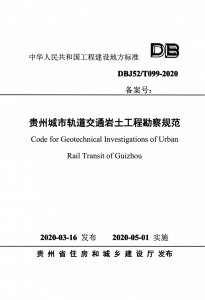
DBJ52/T 099-2020 贵州城市轨道交通岩土工程勘察规范 - 工标库

DBJ52/T 099-2020 贵州城市轨道交通岩土工程勘察规范 现行

发布日期:2020-03-16

实施日期:2020-05-01

  • 标准信息
  • 中文目录
  • 英文目录

中文目录

  • 前 言

  • 1 总 则

  • 2 术语和符号

    • 2.1 术 语

    • 2.2 符 号

  • 3 基本规定

  • 4 岩土分类、岩溶发育程度及围岩分级

    • 4.1 岩石分类

    • 4.2 土的分类

    • 4.3 岩溶发育程度分级

    • 4.4 围岩分级与岩土施工工程分级

  • 5 可行性研究勘察

    • 5.1 一般规定

    • 5.2 目的与任务

    • 5.3 勘察要求

  • 6 初步勘察

    • 6.1 一般规定

    • 6.2 目的与任务

    • 6.3 地下工程

    • 6.4 高架工程

    • 6.5 路基、车辆综合基地场平、涵洞工程

    • 6.6 地面房屋建筑及构筑物工程

    • 6.7 电缆通道

  • 7 详细勘察

    • 7.1 一般规定

    • 7.2 目的与任务

    • 7.3 地下工程

    • 7.4 高架工程

    • 7.5 路基、车辆综合基地场平、涵洞工程

    • 7.6 地面房屋建筑及构筑物工程

    • 7.7 电缆通道

  • 8 施工勘察

  • 9 工程地质调查与测绘

    • 9.1 一般规定

    • 9.2 工作方法

    • 9.3 工作范围

    • 9.4 工作内容

    • 9.5 工作成果

  • 10 勘探与测试

    • 10.1 一般规定

    • 10.2 地球物理勘探

    • 10.3 钻探

    • 10.4 坑探

    • 10.5 原位测试

    • 10.6 岩土取样

    • 10.7 室内试验

  • 11 不良地质作用

    • 11.1 一般规定

    • 11.2 岩溶

    • 11.3 地面塌陷

    • 11.4 滑坡

    • 11.5 危岩、崩塌(落石)

    • 11.6 泥石流

    • 11.7 采空区

    • 11.8 有害气体

  • 12 特殊性岩土

    • 12.1 一般规定

    • 12.2 填土

    • 12.3 红黏土

    • 12.4 膨胀岩土

    • 12.5 软土

    • 12.6 强风化岩、全风化岩和残积土

  • 13 地下水

    • 13.1 一般规定

    • 13.2 水文地质勘察要求

    • 13.3 水文地质参数测定

    • 13.4 地下水长期观测与监测

    • 13.5 地下水作用

    • 13.6 地下水控制

  • 14 岩土工程分析评价与成果报告

    • 14.1 一般规定

    • 14.2 岩土参数的分析与选定

    • 14.3 成果分析与评价

    • 14.4 勘察报告资料整理

    • 14.5 勘察报告的内容

  • 15 现场检验与检测

  • 16 勘察风险管控

    • 16.1 一般规定

    • 16.2 勘察外业风险

    • 16.3 地质条件可能造成的工程风险

  • 附录A 岩溶发育程度分级

  • 附录B 贵阳轨道交通工程岩土分层代码

  • 附录C 轨道交通工程勘探点编号规则

  • 附录D 碳酸盐岩溶蚀风化带划分

  • 附录E 围岩分级

  • 附录F 碳酸盐岩石(体)及结构面物理力学性质指标值

  • 附录G 基坑涌水量预测

  • 附录H 隧道涌水量预测

  • 本规程用词说明

  • 引用标准名录

英文目录

  • 1 General provisions

  • 2 Terms and symbols

    • 2.1 Terms

    • 2.2 Symbols

  • 3 Basic requirements

  • 4 Classification of rock & soil,Grading of karst development degree and surrounding rock

    • 4.1 Classification of rock

    • 4.2 Classification of soil

    • 4.3 Grading of karst development degree

    • 4.4 Grading of surrounding rock and geotechnical construction engineering

  • 5 Feasibility study investigation

    • 5.1 General requirement

    • 5.2 Purpose and task

    • 5.3 Requirement of investigation

  • 6 Preliminary investigation

    • 6.1 General requirement

    • 6.2 Purpose and task

    • 6.3 Underground engineering

    • 6.4 Viaduct project

    • 6.5 Subgrade,vehicle integrated base field-leveling and culvert engineering

    • 6.6 Engineering of building construction and structure foundati on onground

    • 6.7 Engineering of cable channe

  • 7 Detailed investigation

    • 7.1 General requirement

    • 7.2 Purpose and task

    • 7.3 Underground engineering

    • 7.4 Viaduct project

    • 7.5 Subgrade,vehicle integrated base field-leveling and culvert engineering

    • 7.6 Engineering of building construction and structure foundation on ground

    • 7.7 Engineering of cable channel

  • 8 Construction investigation

  • 9 Engineering geological investigation and mapping

    • 9.1 General requirement

    • 9.2 Working methods

    • 9.3 Working range

    • 9.4 Working contents

    • 9.5 Working achievement

  • 10 Exploration and in-situ tests

    • 10.1 General requirement

    • 10.2 Geophysical exploration

    • 10.3 Drilling

    • 10.4 Pitting

    • 10.5 In-situ tests

    • 10.6 Sampling of rock and soil

    • 10.7 Laboratory test

  • 11 Adverse geological actions

    • 11.1 General requirement

    • 11.2 Karst

    • 11.3 Land collapse

    • 11.4 Landslide

    • 11.5 Dangerous rock & toppling(rockfall)

    • 11.6 Debris flow

    • 11.7 Mined-out area

    • 11.8 Harmful gas

  • 12 Special rock & soil

    • 12.1 General requirement

    • 12.2 Fill

    • 12.3 Red clay

    • 12.4 Expansive rock & soil

    • 12.5 Soft soil

    • 12.6 Highly weathered and fully weathered & residual soil

  • 13 Underground water

    • 13.1 General requirement

    • 13.2 Requirement of hydro-geological investigation

    • 13.3 Measurement of hydro-geological parameters

    • 13.4 Long-term observation and monitoring of underground wate

    • 13.5 Action of underground water

    • 13.6 Control of underground water

  • 14 Geotechnical analysis and evaluation & achievement report

    • 14.1 General requirement

    • 14.2 Analysis and selection of geotechnical parameters

    • 14.3 Achievement analysis and assessment

    • 14.4 Processing of data for investigation report

    • 14.5 Contents of investigation report

  • 15 In-situ inspection and checking

  • 16 Investigation risk control

    • 16.1 General requirement

    • 16.2 Survey field risks

    • 16.3 Possible engineering risks caused by geological conditions

  • Appendix A Grading of of karst development degree

  • Appendix B Geotechnical stratification code table for Guiyangurban rail transit project1

  • Appendix C Numbering rule of exploration sites for urban railtransit project

  • Appendix D Rock weathering zone identification of carbonate rock

  • Appendix E Grading of surrounding rock

  • Appendix F Physical and mechanical properties of carbonate rocks(rockmass)and structural planes

  • Appendix G Prediction of water inflow in foundation pit

  • Appendix H Prediction of tunnel water inflow

  • Explanation of wording in this code

  • List of quoted standards

本书术语

术语 英文名称
城市轨道交通 urban rail transit
岩溶 karst
溶洞 karst cave
土洞 soil cave
结构面 structural plane
围岩 surrounding rock
工程周边环境 environment around engineering
抗浮设防水位 groundwater level for prevention of up-floating
不良地质作用 adverse geologic actions
岩溶塌陷 karst collapse

首页 |关于我们 |联系我们 |帮助中心

主办:中国发展改革出版社 版权所有 侵权必究 合作共建单位:中国工程建设标准化协会 京ICP备05021380号-5 ICP 许可证编号 : 京B2-20262562
新建收藏夹

选择收藏夹

收藏夹名称